Contents of this article
When the days grow longer and the first crocuses are in flower, the loveliest time of the year begins in the cemetery too. It is also the busiest: the winter greenery has to go, fresh flowers need planting, and in summer the planting needs water regularly. With the right planning, the grave still stays beautiful without a great deal of effort.
March: bringing the grave out of winter
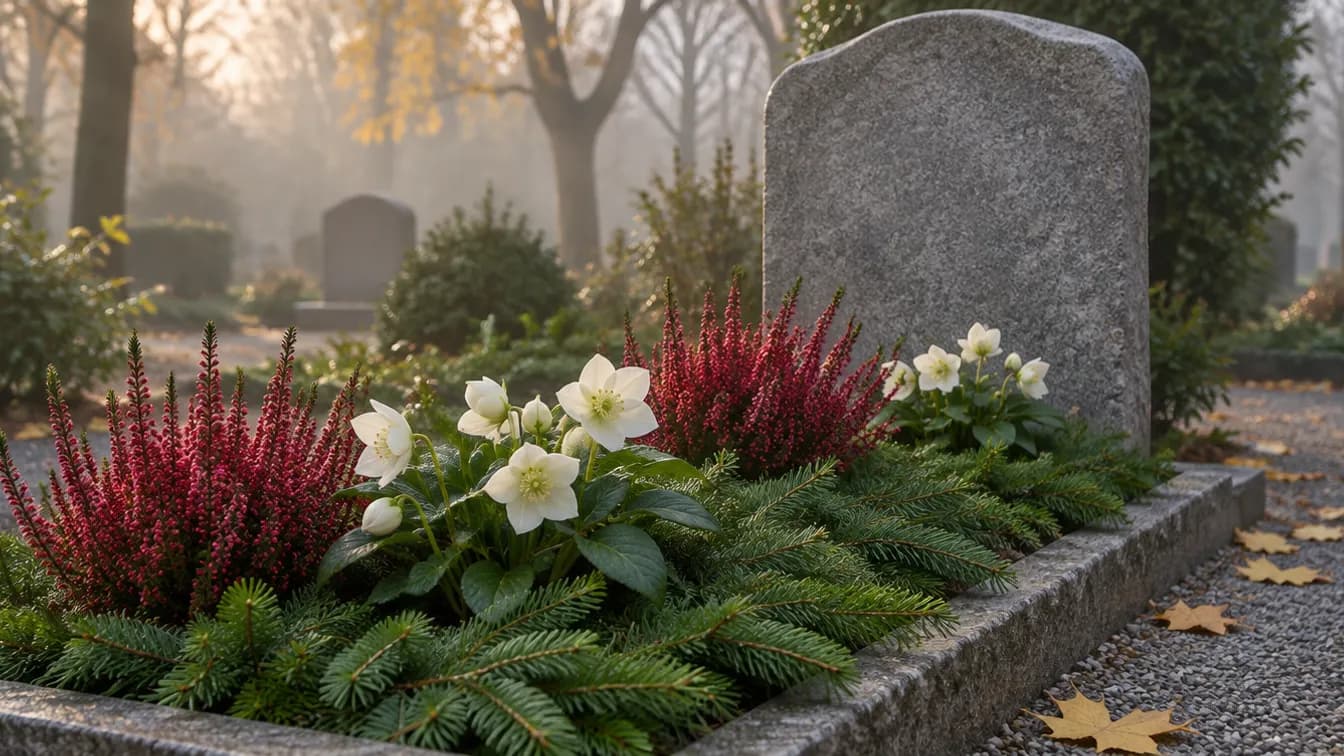
As soon as hard frosts are no longer expected – in most regions of Germany in March – the fir or spruce branches of the winter covering are removed. They have done their job and are now taking the light from the plants that are coming into growth.
After that, a thorough spring clean is due:
- remove branches, old arrangements and remains of leaves from the winter
- cut off dead parts of plants, and trim ground cover plants and shrubs into shape
- remove the first weeds, roots and all
- loosen the soil and, if necessary, top it up with fresh grave soil (Graberde)
- check the gravestone and the surround for frost damage
This is also a good time to free the gravestone of moss and green deposits. You can read how to go about it gently in the article How to clean a gravestone and refresh the inscription.
March to May: spring planting
Plants that tolerate light night frosts are suitable for the first planting of the year:
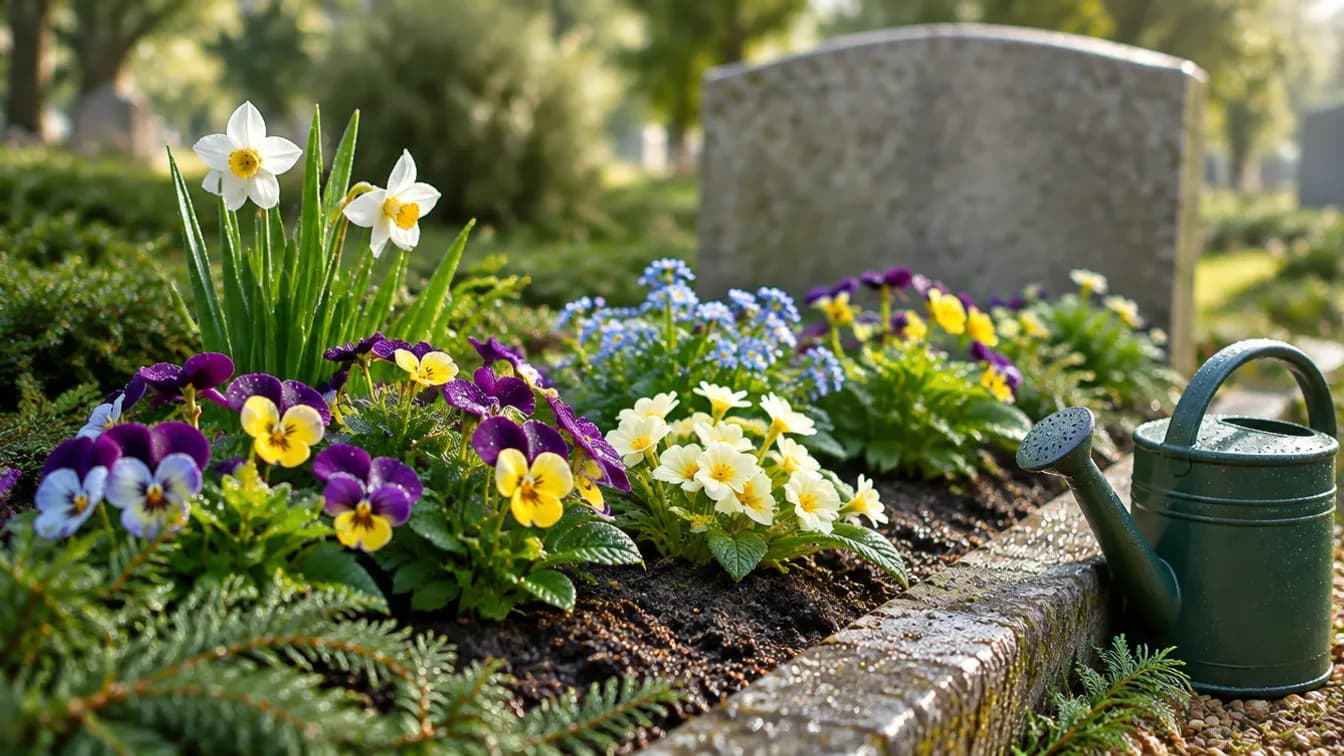
- Pansies and violas: available in almost every colour, long-flowering and robust.
- Primroses: early, bright splashes of colour.
- Forget-me-nots and daisies (Bellis): simple and with symbolic meaning.
- Bulbs: daffodils, tulips, grape hyacinths and crocuses – ideally planted in the autumn, or bought in spring as forced plants in pots.
Plant in groups rather than singly. Three to five plants of one variety side by side look calmer and more harmonious than a colourful mix.
From mid-May: summer planting
After the Ice Saints (Eisheilige), whose days traditionally run from 11 to 15 May, the risk of night frosts is over in most regions of Germany. Now is the time for frost-tender summer flowers. By then the spring planting has usually finished flowering and is replaced.
For sunny graves:
- wax begonias and tuberous begonias
- geraniums (pelargoniums) in small varieties
- lavender and sage, which also attract insects
- portulaca, which tolerates heat particularly well
For shady graves:
- busy Lizzie
- tuberous begonias
- fuchsias in small varieties
- hostas for decorative foliage
When buying, look for compact, healthy plants with plenty of buds. They flower for longer than specimens that are already in full bloom. Set the plants as deep as they stood in the pot, firm the soil well and water them generously straight after planting.
If you would like to save water, choose drought-tolerant plants and cover the soil between the flowers with grave soil or bark mulch, provided the cemetery allows it.
Watering properly in hot weather
In summer, watering is the most important task and also the most time-consuming. A few rules help to bring the plants safely through hot weeks:
- Water in the morning or evening: In the midday heat, much of the water evaporates before it reaches the roots.
- Thoroughly rather than often: It is better to water well two to three times a week than a little every day. That way the roots grow downwards.
- Aim at the soil: Give the water directly to the roots, not over the leaves.
- Form a watering hollow: A shallow dip around newly set plants keeps the water where it is needed.
Many cemeteries provide water points and watering cans. During long hot spells, local authorities may call on people to use water sparingly. Plants that need little water then have a clear advantage.
When you are away in summer
During the summer holidays in particular, a grave is often left without care for weeks. If you are away at that time or live far away, you can order a watering service. A grave carer from the area then waters weekly or as needed and sends you a photo. This combines well with weeding. The article Grave care from a distance describes how to organise care from afar.
Keeping weeds under control
Warm temperatures and regular watering do not only make the flowers grow. Weeds spread especially quickly in summer. The most effective approach is to weed every two to three weeks – roots and all, before the plants form seeds. Chemical weedkillers are generally prohibited in cemeteries in Germany and also harm the plants on the grave.
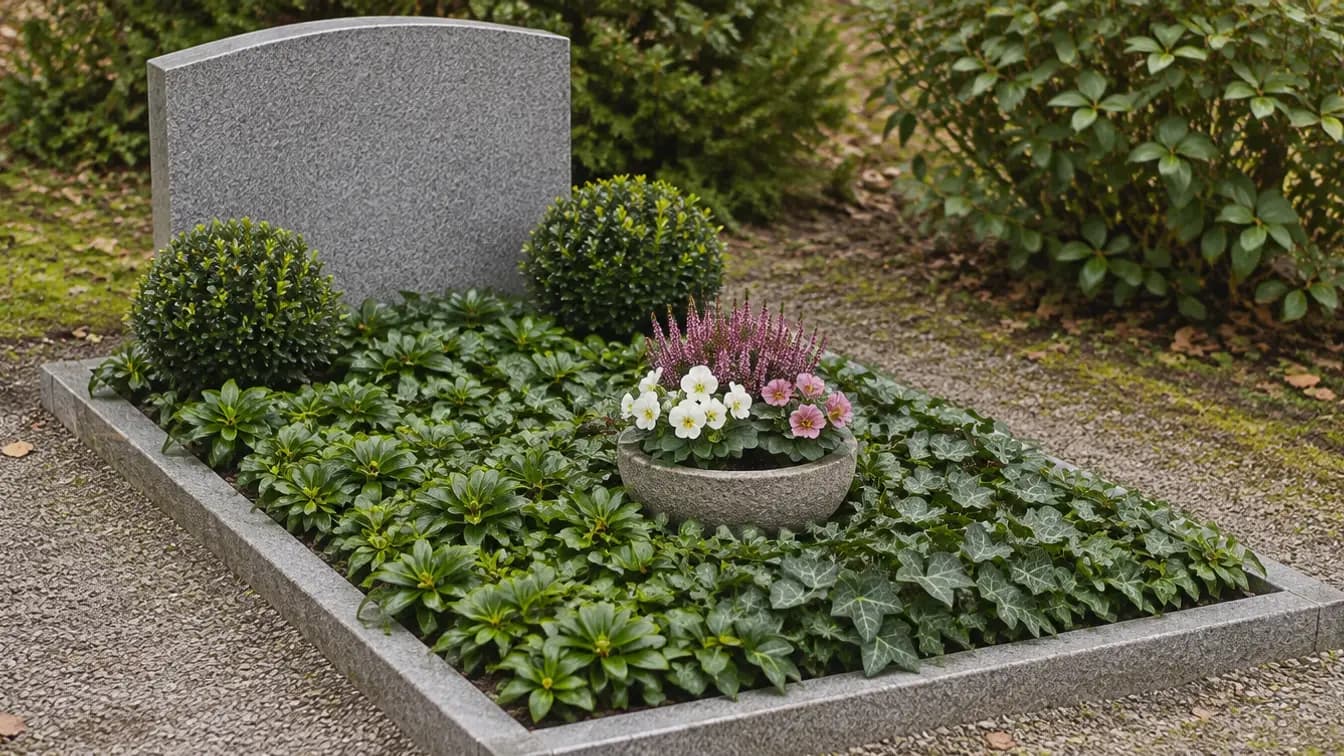
In the long term, an unbroken cover of plants helps. Weeds have hardly any chance between densely growing ground cover plants. You can read which plants are suitable in the article Low-maintenance planting for a grave.
Days of remembrance in spring and summer
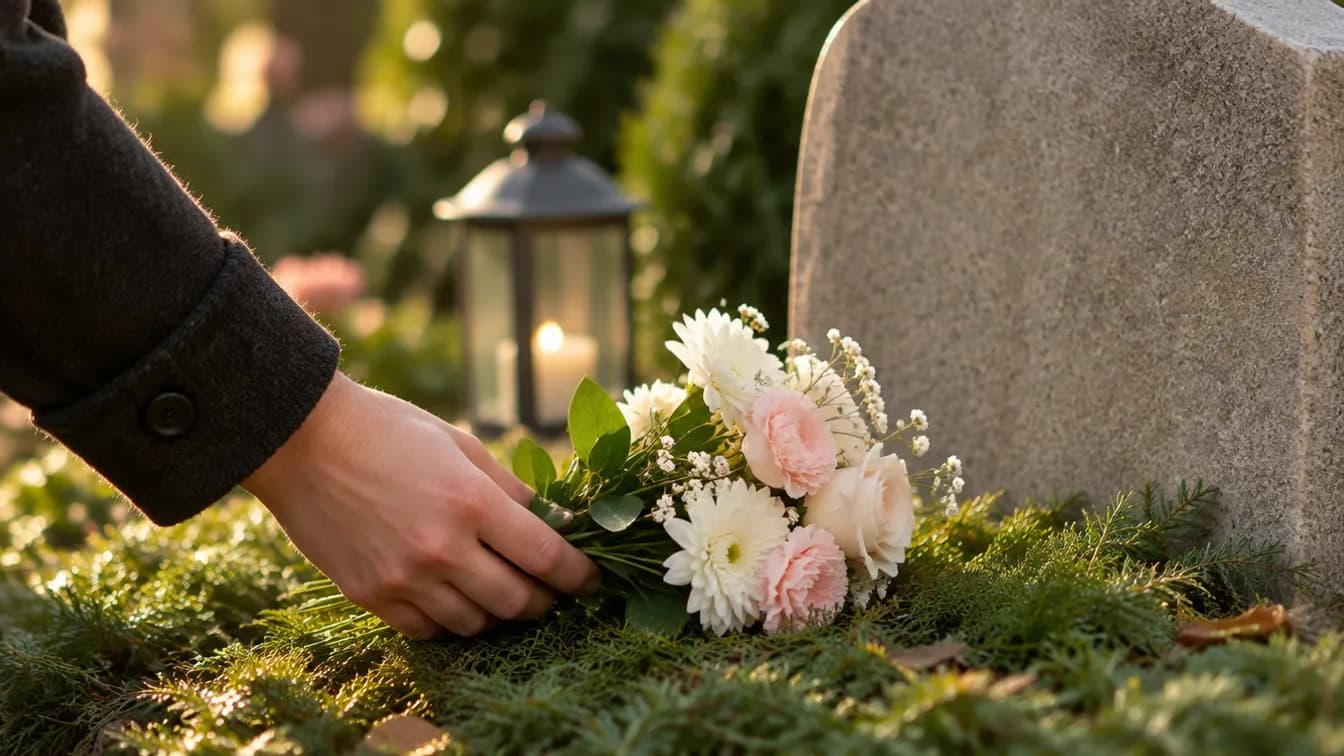
In the warm season, too, there are occasions on which many families decorate the grave with particular care. At Easter, fresh spring flowers, branches in bud or a simple arrangement are popular. On Mother’s Day and Father’s Day (in Germany the second Sunday in May and Ascension Day), many relatives bring a bouquet or a planted bowl. Then there are personal dates such as the birthday of the person who has died or the anniversary of their death.
Cut flowers last only a few days in the summer heat. A flowering pot plant or a small planting lasts longer and is a reminder of the special day for weeks. Wilted flowers and empty vases should be removed at the next visit so that the grave does not look neglected. If you cannot come yourself on such days, you can have fresh flowers laid on the date you choose and receive a photo of them.
End of August: preparing for autumn
Towards the end of summer, many flowers begin to fade. If you would like attractive planting through to the autumn, you can switch in September to autumn-flowering plants such as heather, chrysanthemums or coral bells. By the end of October at the latest, preparation for winter begins – explained step by step in the article Preparing a grave for winter.
Conclusion
Spring and summer call for the most attention in the cemetery. With a spring clean in March, planting in two stages and sensible watering habits, the grave still stays beautiful with a manageable amount of effort. And when you are not there yourself, someone from the area takes care of the watering and weeding for you.
Frequently asked questions
When should the fir branches be removed from the grave?
As soon as hard frosts are no longer expected, usually in March. If the branches are left in place too long, the plants coming into growth do not get enough light, and the needles make the grave dirty.
When is the summer planting put on the grave?
Frost-tender summer flowers such as begonias or busy Lizzies are planted after the “Ice Saints” in mid-May, the traditional end of night frosts. Before then, night frosts can damage them.
How often does a grave need to be watered in summer?
Two to three times a week in heat and drought, about once a week in normal weather. Watering thoroughly in the early morning or in the evening matters more than watering often.
How do I get rid of weeds between the plants for good?
The most effective method is regular weeding, roots and all, before the weeds set seed. In the long term, dense planting with ground cover plants helps. Chemical weedkillers are generally not permitted in cemeteries in Germany.